

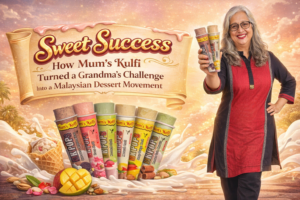
From Grandma’s Kitchen to a National Craze The Rise of Mum’s Kulfi
One bold comment. One birthday party.
One grandma who took it personally.
Nine years ago, Sunita wasn’t planning to build a food brand. She was just out for dinner when her husband tasted kulfi at an Indian restaurant and casually said, “You can make this better.”
Challenge accepted.
What happened next? A homemade dessert became one of Malaysia’s most talked about kulfi brands, Mum’s Kulfi and quietly introduced a whole new ice cream culture to the local market.
From Grandma’s Kitchen to Petaling Jaya’s First Client

Sunita has always expressed love through food. Her grandchildren knew it. Her family knew it. But that one year old granddaughter’s birthday party changed everything.
She showed up with homemade kulfi. Creamy. Nutty. Rich with saffron.
It wasn’t just dessert. It was a moment.
Word spread fast. Soon, one restaurant in Petaling Jaya came on board. Then another. And another.
Back then, kulfi wasn’t mainstream in Malaysia. It wasn’t gelato. It wasn’t typical ice cream. It was denser. Slower to melt. Packed with flavor. A heritage dessert that deserved its spotlight.
That’s when Sunita’s son, Rahul, stepped in.
If this was going to grow, it needed more than love. It needed strategy.
Bootstrapped, Brave, and Built From Scratch
No angel investors.
No fancy funding rounds. Just family grit.
Before COVID-19, Mum’s Kulfi operated strictly B2B supplying restaurants and F&B outlets.
Then came the plot twist.
They secured an MBPJ-approved commercial kitchen. Four days later? Malaysia’s first major lockdown.
Restaurants shut down overnight. Game over?
Not even close.
Supportive partners like Kanna Curry House and Chat Masala kept them alive through takeaway menus. At the same time, the family pivoted fast launching direct-to-consumer sales on Grab and Foodpanda.
It was survival mode. But it worked.
Rahul’s wife became the brand’s secret weapon running social media, shooting product photos, designing graphics. No agency. No outsourcing. Just hustle.
While many businesses folded, Mum’s Kulfi doubled down. And Malaysians showed up.
Scaling Without Losing the Soul
Growth is easy. Consistency is hard.
Going from making a few cups at home to producing tens of thousands commercially? That’s where most brands lose authenticity.
Sunita refused.
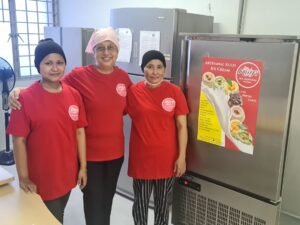
Every 90 gram cup was standardized. Every batch lab-tested to maintain sugar balance. They invested in commercial blast freezers that could take products down to -18°C in just hours.
They secured KKM, MeSTI, and Halal certifications not just for compliance, but for credibility.
And when customers said traditional North Indian recipes were too sweet?
Sunita listened.
She tweaked the formulas. Reduced the sweetness. Keep the richness. Balanced tradition with Malaysian taste preferences.
That’s how you scale without selling out.
A Malaysian Twist on a Heritage Dessert
Today, Mum’s Kulfi offers 15 flavors.
Yes, the classics are pistachio, almond, and saffron. But this is Malaysia. So they went local.
Durian.
Pandan coconut. Salted gula melaka.
They even introduced a “no stick, no drip” squeeze tube version because let’s be honest, nobody likes melted dessert disasters in Malaysian heat.
Now present in Penang, Ipoh, and Johor Bahru, the brand has grown beyond a home kitchen dream. And the core team? Still with them since day one.
That kind of loyalty doesn’t happen by accident. It happens when you build with heart.
The Bigger Picture: More Than Just Kulfi
This isn’t just a dessert story. It’s about the second chapters.
It’s about family businesses done right.
It’s about Malaysian food entrepreneurs who refuse to quit.
In a market dominated by global ice cream giants, a grandmother with a recipe and a family with belief carved out their own lane.
And they’re not done.
Over the next five years, Sunita and Rahul plan to take Mum’s Kulfi beyond Malaysia sharing their sweet legacy with the world.
From a birthday party experiment to a nationally recognized Malaysian dessert brand. All because someone said, “You can do better.”
She did.
And Malaysia is sweeter for it.


