

🧬 Stem Cell Therapy Is No Longer Science Fiction It’s Science in Progress
The phrase “stem cell” triggers two very different emotions.
For some, it represents hope the possibility of healing when conventional medicine falls short.
For others, it signals hype bold promises that seem too good to be true.
Both reactions are understandable.
For decades, stem cells have been part of legitimate medical practice. Yet the term has also been stretched beyond scientific evidence, creating confusion between what is proven and what is still experimental.
Let’s begin with clarity.
What Stem Cells Actually Are
Stem cells are foundational biological units in the human body. They have two defining characteristics:
- They can renew themselves.
- Under the right biological signals, they can develop into specialised cells that repair damaged tissues.
This is not speculative theory. It is established human biology.
And importantly stem cell therapy is not new.
Proven Stem Cell Treatments Already in Use
Some of the most established medical procedures rely on stem cells:
- Bone marrow transplantation has treated leukaemia and blood disorders for over 50 years by rebuilding the blood and immune system.
- Skin regeneration therapies help severe burn patients recover.
- Corneal stem cell treatments have restored vision in selected cases.
These are not experimental miracles. They are standard medical practice.
So why does the public conversation often revolve around dramatic, almost cinematic claims?
The Gap Between Headlines and Evidence
Stem cell science entered mainstream awareness through bold headlines reversing paralysis, curing chronic disease, slowing ageing.
Hope travels faster than data.
But real scientific progress follows a disciplined path:
- Laboratory discovery
- Preclinical validation
- Controlled clinical trials
- Regulatory approval
This process is not bureaucracy. It is patient protection.
Today, some clinics around the world offer “stem cell” treatments without robust clinical evidence or proper oversight. Not every therapy labelled as stem cell–based is scientifically validated.
Distinguishing between approved treatments and unproven interventions is critical.
Regenerative Medicine in Malaysia
At the Pusat Kanser Tun Abdullah Ahmad Badawi (PKTAAB) under Universiti Sains Malaysia, research teams are exploring stem cell biology in cancer, lung injury, and tissue repair.
Their focus is not hype it is mechanism.
Researchers examine:
- How lung tissue responds to injury and chronic inflammation
- How regenerative signals are controlled
- How cancer stem cells contribute to tumour resistance
Understanding repair mechanisms is essential before any therapy can be responsibly translated to patients.
In oncology, regenerative medicine is not about growing more cells. It is about controlling cell behaviour promoting repair where needed and inhibiting abnormal growth where dangerous.
What’s Still Experimental?
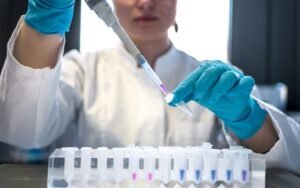
Globally, regenerative medicine research includes:
- Cell-based therapies for neurodegenerative diseases
- Cardiac tissue repair after heart attacks
- Organoid systems that model disease in laboratories
These areas are scientifically rigorous but many remain in clinical trial phases.
Experimental does not mean fraudulent.
It means not yet established as standard care.
What Stem Cells Cannot Do
One major misconception is that more stem cells equal better healing.
Cell therapy is complex. Cells:
- Respond to their environment
- Differentiate depending on signals
- Migrate, communicate, or die based on context
Without precise control, outcomes become unpredictable.
Stem cells are not instant restoration tools. Outcomes depend on:
- Disease mechanism
- Timing
- Cell preparation
- Delivery methods
- Patient selection
In approved settings, patients may experience improved tissue repair, reduced inflammation, or slower disease progression but not guaranteed cures.
The Future: Smarter, More Controlled Approaches
Regenerative medicine is evolving beyond simple cell transplantation.
Emerging areas include:
- Extracellular vesicles
- Cell-derived signalling molecules
- Biomaterials
- Advanced organoid technologies
These approaches may allow more targeted and controlled therapies in the future.
For Malaysia, regenerative medicine represents both opportunity and responsibility. National progress requires infrastructure, ethical oversight, and sustained scientific investment.
Centres like PKTAAB integrate laboratory research, clinical collaboration, and regulatory discipline to ensure that innovation remains evidence-based.
Proof Over Promises
Stem cells are neither miracle cures nor medical scams by default.
They are biological tools.
Their impact depends entirely on how responsibly they are studied, regulated, and applied.
Patients also have a role to play. Asking whether a therapy is approved, part of a registered clinical trial, and supported by evidence is not scepticism — it is informed healthcare.
Stem cell science is already embedded in modern medicine. Its most meaningful advances are often quiet, incremental, and grounded in data.
The future of regenerative medicine will not be built on promises.
It will be built on proof.


