

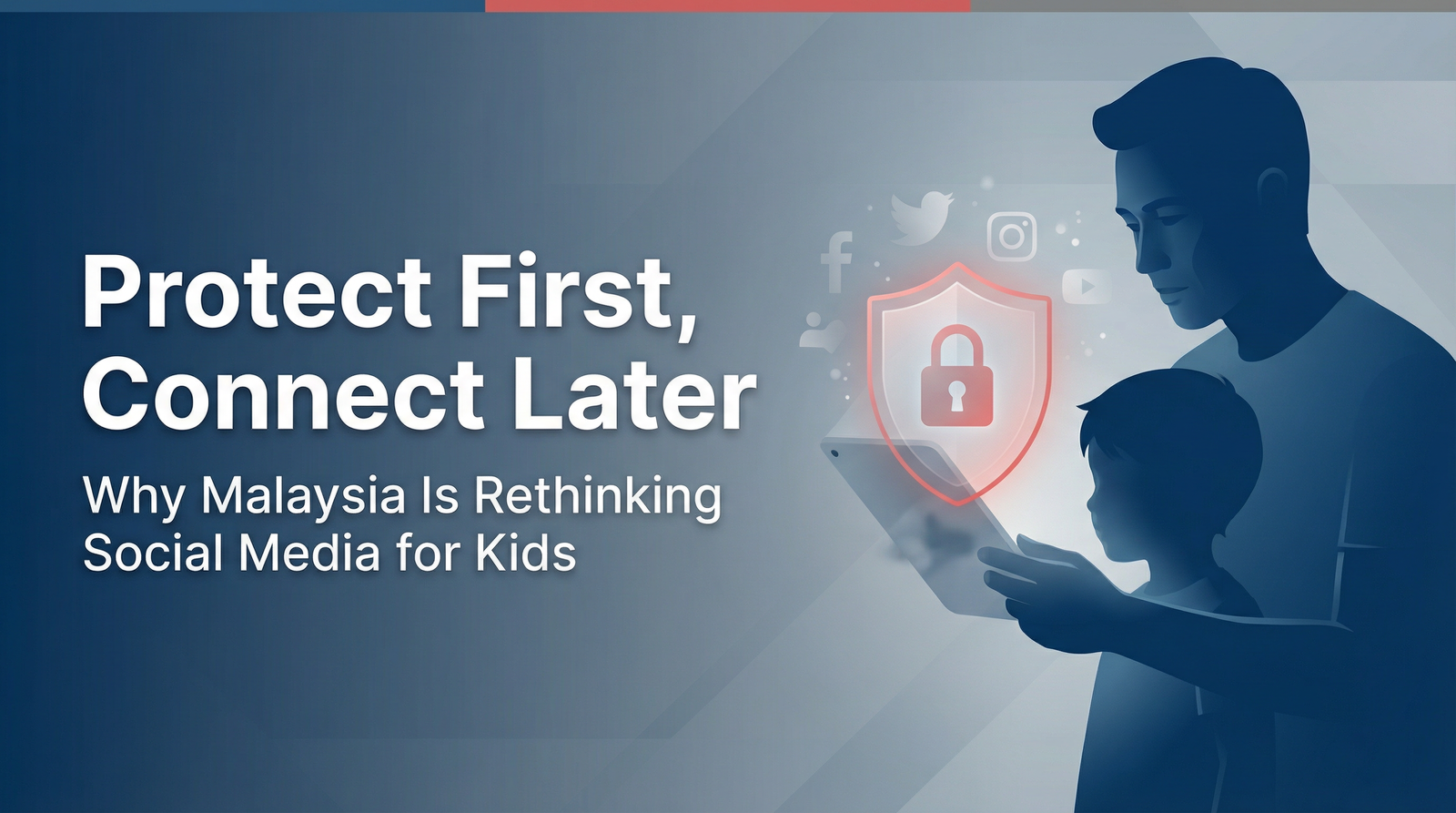
PETALING JAYA As Malaysia intensifies efforts to protect young people in the digital age, a proposed ban on social media access for children under 16 is sparking nationwide debate. But according to former Education deputy minister Datuk Seri P. Kamalanathan, the policy is not about limiting freedom it’s about giving children the time and space to grow stronger before stepping into unfiltered digital environments.
Speaking amid rising concerns over online harm, Kamalanathan stressed that age-based restrictions are a necessary safeguard, not an inconvenience. He described the move as a temporary pause, designed to protect young minds during their most formative years.
“This is not denial. It’s delayed access so young people can develop emotional maturity and judgement before engaging independently online,” he said.
🚦 Just Like Driving, Digital Access Requires Readiness

Drawing a parallel with road safety laws, Kamalanathan likened social media use to driving an activity governed by age limits to protect not just the individual, but society at large.
He warned that children often lack the cognitive and emotional tools needed to navigate social media safely, leaving them vulnerable to:
- Algorithm-driven addiction
- Harmful social comparison
- Data exploitation
- Exposure to inappropriate or damaging content
“Most platforms are not built for education,” he said. “They are built for engagement, amplification, and profit.”
A clear age boundary, he added, creates clarity, enforceability, and equality, ensuring that protection does not depend on parental capacity or socioeconomic background.
⚖️ Equity Over Convenience
While parental supervision is ideal in theory, Kamalanathan noted that it is uneven in practice. Differences in digital literacy, time, and awareness often create protection gaps across households.
“A blanket policy ensures every child gets the same baseline protection,” he said. “That is equity.”
He also emphasized that digital literacy can still be taught within controlled, guided environments—without exposing children to the risks of open social media ecosystems.
🧠 Mental Health Voices Raise Caution
However, mental health advocates warn that a total ban could have unintended consequences if not paired with accessible support systems.
Sneham Malaysia founder Datuk Dr Florance Sinniah highlighted that many teenagers rely on digital platforms to seek emotional support, especially during times of distress.
“Online spaces are often where young people express emotions, seek help, and connect with trusted adults,” she said.
She cautioned that cutting off access entirely could increase isolation particularly for vulnerable youths unless alternative help channels are clearly visible and easy to reach.
📱 A Generation Raised Online
Florance also pointed out that digital dependency surged during the Covid-19 pandemic, when students were forced into remote learning. As a result, online engagement has become deeply embedded in daily life.
“Digital life is inevitable,” she said. “Long-term bans may delay the development of critical thinking, self-regulation, and healthy help-seeking behaviours.”
Instead, she advocated for guided digital engagement, where parents play an active role in supervision, communication, and trust-building.
🔑 The Real Goal: Safer, Stronger Digital Citizens
Both perspectives converge on one key truth: child safety must come first, but long-term resilience requires education, guidance, and shared accountability.
Whether through delayed access or supervised engagement, the conversation signals a broader shift towards a future where young Malaysians are not just digitally connected, but digitally prepared.


