

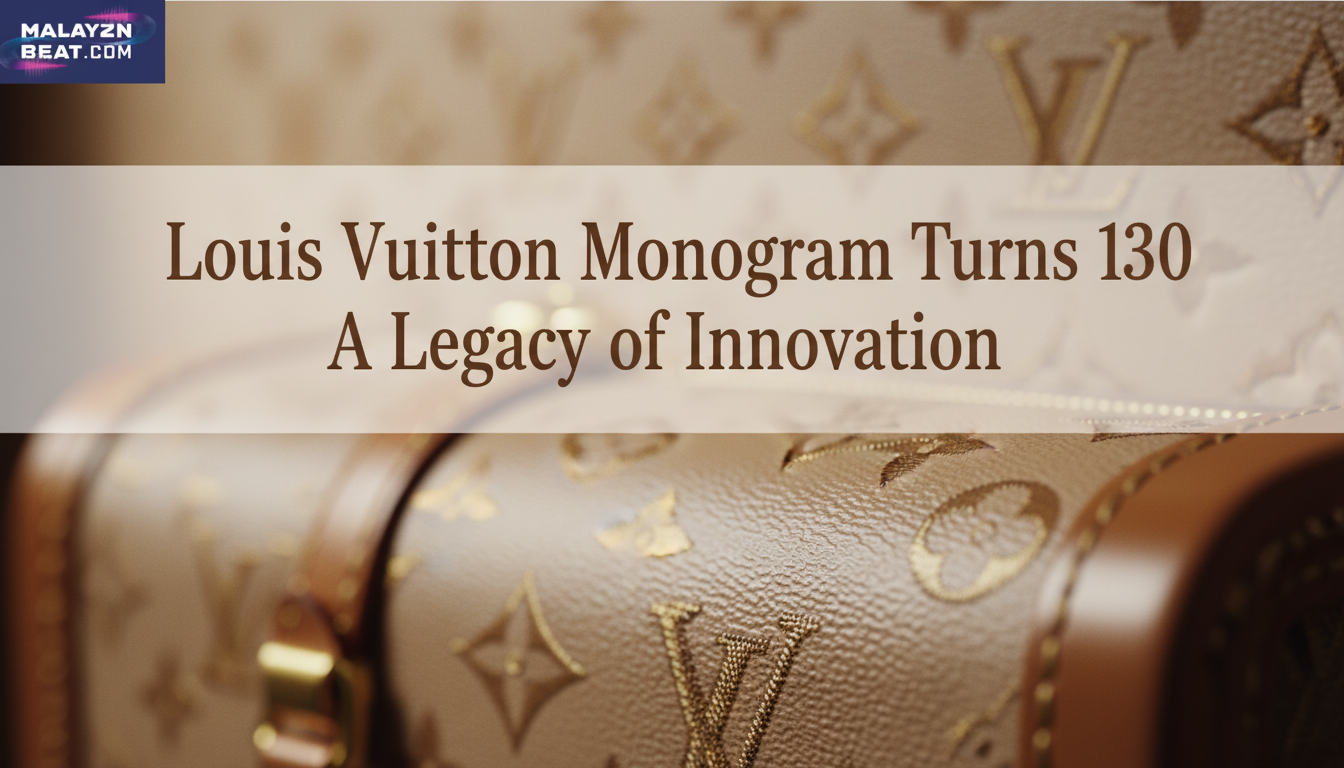
Because true icons aren’t created overnight they’re built through vision, discipline, and relentless reinvention.
For 130 years, the Monogram has stood not just as a pattern, but as a philosophy one that proves legacy is earned through innovation, not nostalgia. As Louis Vuitton marks the 130th anniversary of its most recognisable emblem, the maison invites us to revisit a story where craftsmanship, protection, and imagination converge.
First conceived in 1896 by Georges Vuitton, the Monogram was born out of both love and foresight. Designed as a tribute to his late father and as a safeguard against rampant counterfeiting, it transformed luxury into authorship. When the design was officially registered in 1897, it became one of fashion’s earliest modern trademarks a bold declaration that originality deserves protection.
The interlocking LV initials, framed by stylised flowers, drew inspiration from Neo-Gothic architecture, Japanese family crests, and the modernist pulse of fin-de-siècle Paris. Together, they formed a visual language that would go on to shape global luxury for generations.
From Travel Companion to Cultural Icon
Woven first in linen jacquard with warm ecru and sienna tones, the Monogram made its debut on Louis Vuitton’s trunks instantly linking the design to exploration, movement, and the romance of travel. But evolution never paused.
From the pochoir stencil technique introduced in 1902 to the revolutionary coated canvas of 1959, each innovation strengthened the Monogram’s adaptability. It moved seamlessly from rigid trunks to soft luggage, responding to how the world itself was changing. Decades later, the Monogram Eclipse reimagined the classic motif in deep graphite tones proof that timelessness doesn’t mean standing still.
As the 20th century unfolded, the Monogram travelled alongside humanity from steamships to jet cabins, from railway platforms to global capitals. It became a symbol not just of travel, but of progress itself.
A Canvas for Creative Courage
What truly defines the Monogram’s longevity is its openness to reinvention. Across decades, it has served as a collaborative canvas for some of the world’s most influential creative minds blurring boundaries between fashion, art, architecture, and culture.
Each reinterpretation reaffirmed a powerful truth: heritage is strongest when it invites dialogue. The Monogram didn’t resist change it absorbed it, evolved with it, and emerged stronger every time.
Bags That Defined Generations
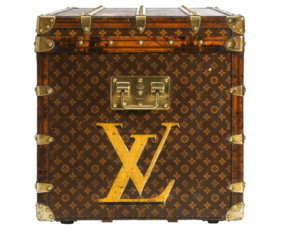
Several of Louis Vuitton’s most iconic creations crystallise this 130-year journey:
- The Speedy (1930) — inspired by the era’s obsession with velocity, it redefined everyday luxury and urban mobility.
- The Keepall (1930) — lightweight, generous, and liberating, it changed the way the world travelled.
- The Noé (1932) — designed for Champagne bottles, it transformed practicality into effortless Parisian charm.
- The Alma (1992) — descended from the Art Deco-era Squire Bag, it became a symbol of structured elegance and modern femininity.
Together, these pieces tell a story of adaptability — proof that when design meets purpose, icons are born.
A Living Code, Not a Museum Piece
As Louis Vuitton steps into this milestone celebration, the Monogram stands as both history and future — a living code recognised across cultures, continents, and generations. It reminds us that true success isn’t about chasing trends, but about building values so strong they evolve naturally with time.
Because when craftsmanship meets vision, even a pattern can change the world.


