

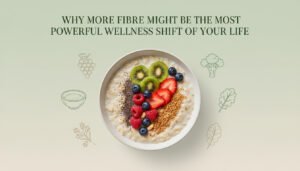
There’s a new wellness buzzword shaking up TikTok, Reddit threads, and nutrition newsletters fibremaxxing.
And no, it’s not a workout for your stomach. It’s a rapidly growing lifestyle movement built on one simple truth:
👉 More fibre = Better digestion, better energy, better health.
Fibremaxxing isn’t a diet. It’s a mindset a way of eating that prioritises high-fibre foods at every single meal so your gut, metabolism, and overall health thrive.
So what does fibremaxxing actually look like?
Think:
- Filling your plate with fruits, veggies, legumes, whole grains
- Choosing fibrous foods (oats over cereal, brown rice over white)
- Adding fibre supplements like psyllium or inulin
- Tracking fibre intake like people track protein
Fans of the trend swear by:
- smoother digestion
- clearer skin
- consistent energy
- stable blood sugar
- better appetite control
And honestly? Science backs a lot of it.
Why Fibre Is Suddenly Trending Everywhere

Once ignored, fibre is now the main character of global nutrition trends. Here’s why it’s booming:
1. Gut Health = Wellness Currency
The 2020s turned gut health into a cultural obsession. Fibre fuels good gut bacteria and creators are turning microbiome-friendly diets into a lifestyle flex.
2. The GLP-1 Wave
With weight-loss drugs dominating headlines, people want natural ways to boost satiety.
Fibre increases natural GLP-1, helping control cravings no injections required.
3. The Protein-First Fatigue
We’ve had years of protein shakes, bars, and macro-counting. Now experts argue fibre is the real nutrient missing from most diets.
4. It’s Cheap, Simple, and Accessible
Oats, lentils, bananas, spinach, chickpeas — all affordable, available, and incredibly effective.
🥗 How Much Fibre Should You Actually Eat?
Most people get less than half the recommended amount.
- Women: ~25g/day
- Men: ~30–38g/day
Fibremaxxers aim for:
- 30–50g/day (beginners)
- 50–80g/day (hardcore)
That’s a jump which is why experts say to increase gradually.
💥 What Fibremaxxing Fans Claim (And What Science Suggests)
Most benefits are real, especially when done safely.
✔ Better Digestion
Less bloating and more regularity — after the adjustment period.
✔ Better Appetite Control
Fibre slows digestion, helping you feel fuller for longer.
✔ Better Blood Sugar
Soluble fibre reduces glucose spikes a win for energy and metabolic health.
✔ Lower Cholesterol
Some fibres bind cholesterol and help flush it out.
✔ Weight Management Support
Fibre doesn’t burn fat but it does make overeating a lot harder.
🔍 Two Types of Fibre And Why You Need Both
Soluble Fibre
Found in: oats, apples, bananas, chia, psyllium
Benefits: improved blood sugar + cholesterol, smoother digestion
Insoluble Fibre
Found in: whole grains, veggies, nuts
Benefits: adds stool bulk, supports regularity
Fibremaxxing works best when you combine both.
⚠ Potential Downsides (If You Overdo It)
Even healthy trends have limits.
- gas
- bloating
- cramps
- constipation or diarrhoea
- mineral absorption issues (calcium, zinc, iron)
And remember: fibre + no water = disaster. Always hydrate.
Should You Try Fibremaxxing?
Short answer: Yes but smartly.
If you’re curious:
- increase fibre slowly (5g per week)
- drink a LOT of water
- focus on whole foods first
- mix your fibre sources
- consider supplements only if necessary
Those with IBS, Crohn’s, or specific gut disorders should consult a professional.


